
Updated: February 25, 2026 | Tapbit Crypto News & Updates
Bitdeer’s decision to reduce its corporate Bitcoin holdings to zero has become one of the most discussed miner strategy shifts of 2026.
According to recent public reports and company-linked updates, the Nasdaq-listed miner sold both treasury BTC and newly mined BTC, then redirected liquidity toward AI and high-performance computing (HPC) infrastructure. This is not just a treasury management story — it reflects a broader industry trend where miners are re-evaluating whether Bitcoin on the balance sheet delivers a better return than power-connected AI data center capacity.
In this Tapbit guide, we break down what Bitdeer did, why miners are pivoting toward AI, what risks the strategy carries, and what crypto traders should watch next.
Track live crypto market moves anytime on Tapbit Price.
What Bitdeer Did
Reports covering Bitdeer’s weekly update indicate the company’s pure BTC holdings (excluding customer deposits) fell to 0 BTC as of February 20, 2026. The same update also showed:
- BTC Output: 189.8 BTC
- BTC Sold: 189.8 BTC (all newly mined coins sold)
- Net BTC Added: -943.1 BTC (reflecting treasury liquidation)
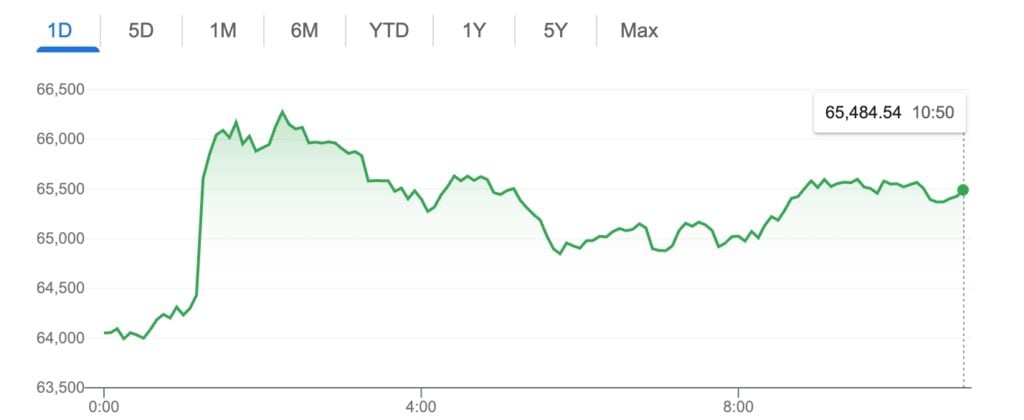
This matters because Bitdeer did not simply sell a portion of production to cover operating costs — it appears to have fully exited its corporate treasury position, signaling a strategic reallocation rather than a routine treasury rebalance.
Why a Miner Would Sell Bitcoin to Fund AI
The short answer: capital efficiency and revenue visibility.
Bitcoin mining remains highly cyclical. Miners face pressure from halving-related economics, difficulty adjustments, energy costs, and token price volatility. By contrast, AI/HPC infrastructure can offer more stable, contract-based revenue if a company can secure customers and convert its power footprint into data center capacity.
That logic is increasingly common across the industry. Reuters previously reported that many miners are exploring AI data center conversions because they already control the two hardest assets to get: land and power. Reuters also noted analysts expect a meaningful share of miner power capacity to pivot toward AI by 2027, while warning that the transition is complex and not guaranteed to succeed.
Bitdeer’s Funding Context: AI Expansion Needs Real Cash
AI infrastructure expansion is capital intensive. It is not just about “using the same buildings” — it can require major upgrades for cooling, networking, power distribution, and hardware deployment.
Public filings and company disclosures support the idea that Bitdeer is raising and repositioning capital aggressively in 2026:
- A February 2026 SEC prospectus supplement shows Bitdeer pricing a registered direct equity offering, with estimated net proceeds of about US$43.5 million.
- The same filing also references a concurrent notes transaction with estimated net proceeds of about US$315.1 million (or more if the option is exercised in full), alongside debt-related transactions.
Separately, Bitdeer’s Q4/FY2025 results (published via GlobeNewswire) describe the company as a Bitcoin mining and AI infrastructure business and note it offers cloud capabilities for AI demand, reinforcing that AI is not just a side experiment in company messaging.
Why This Is Bigger Than Bitdeer
Bitdeer’s move fits a larger mining-sector trend: miners are no longer being valued only for the Bitcoin they hold, but also for the power capacity and infrastructure they control.
Reuters has reported similar AI pivot exploration by other miners, including Bitfarms, and highlighted why the model is attractive: long-term HPC/AI contracts can generate steadier cash flows than pure mining operations. That doesn’t mean every pivot will work — Reuters also quoted industry skepticism about execution difficulty — but the direction of travel is clear.
In other words, “miner strategy” in 2026 is increasingly a question of energy + compute monetization, not just BTC treasury size.
What This Could Mean for Bitcoin Markets
For Bitcoin itself, the implications are mixed:
1) Less miner treasury accumulation
If more miners stop accumulating BTC and sell production more quickly, that can reduce one source of structural demand from corporate treasuries.
2) More liquid supply during weak periods
When treasury strategies shift, more mined BTC may hit the market rather than being held on balance sheets.
3) Potentially stronger mining companies
If AI/HPC revenue stabilizes miner cash flow, some operators may become more resilient in downturns, which could reduce forced-selling risk during future stress cycles.
The Key Risk Everyone Should Remember
AI pivot headlines sound bullish for miners, but execution is hard.
Reuters has emphasized that AI data centers are more sophisticated than crypto mining facilities, often requiring longer build timelines and specialized infrastructure. So while the strategic rationale is strong, the market still needs proof of execution: signed contracts, ramped capacity, and profitable utilization.
That means traders should separate two things:
- Good narrative: “AI pivot”
- Good execution: actual revenue and operating performance from AI/HPC
How Tapbit Users Can Approach This Theme
Even if you are not trading mining stocks, Bitdeer’s move is useful context for crypto market positioning:
- Watch miner behavior as a macro signal
Treasury selling, financing activity, and AI expansion can all affect sentiment. - Track BTC price and volatility in real time
Use Tapbit Price to monitor market structure shifts. - Stay selective on AI-crypto narratives
Not every “AI pivot” creates immediate value. - Keep risk management first
Sector narratives can move fast, especially when tied to miner financing and treasury headlines.
Get started on Tapbit:
Final Thoughts
Bitdeer’s zero-BTC treasury move is a strong signal that the crypto mining industry is entering a new phase. In 2026, the most valuable asset for many miners may no longer be the Bitcoin they hold — it may be the power, land, and infrastructure they can convert into AI computing capacity.
For traders and long-term investors, this is a trend worth watching closely: it could reshape miner valuation models, Bitcoin supply behavior, and the overlap between crypto infrastructure and AI infrastructure for years to come.
Disclaimer: This article is for informational purposes only and does not constitute investment advice. Always do your own research before making investment decisions.