Updated: February 2026 | Tapbit Market Insight
Gold at $5,000 used to sound like the kind of number people threw around in panic scenarios and late-night macro threads.
Now it is real.
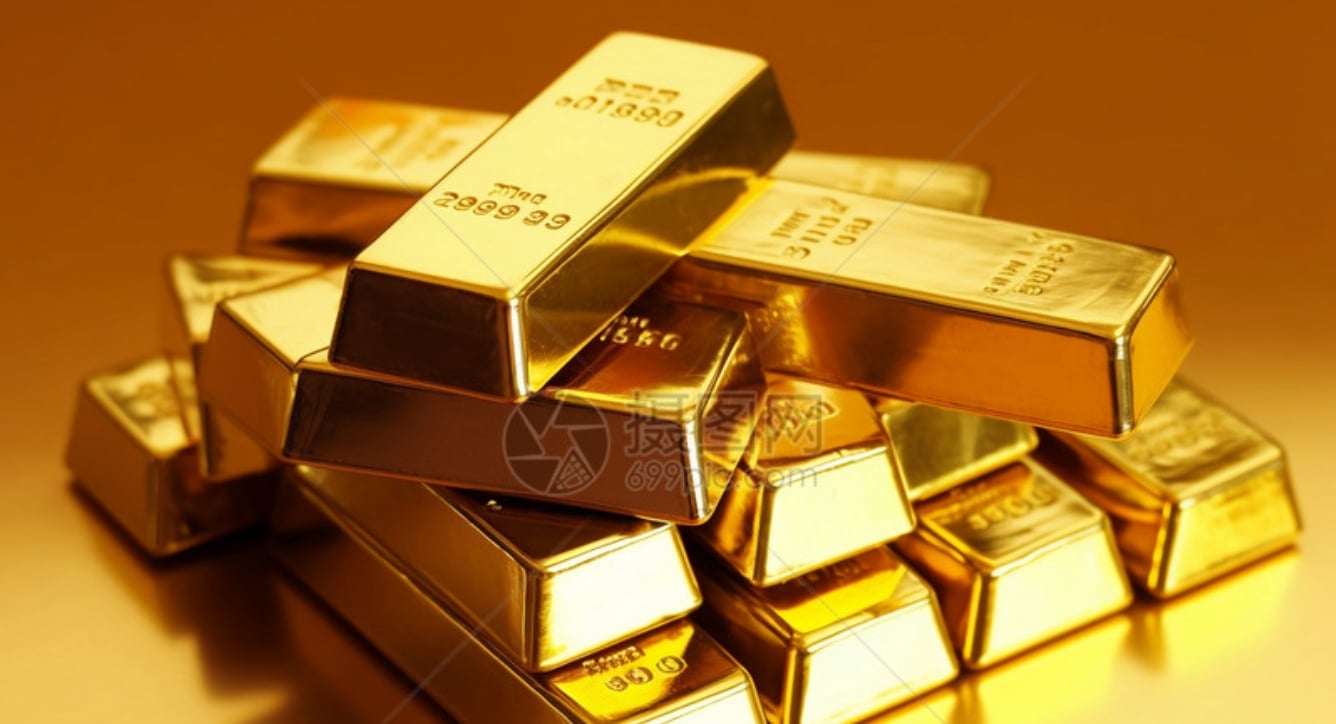
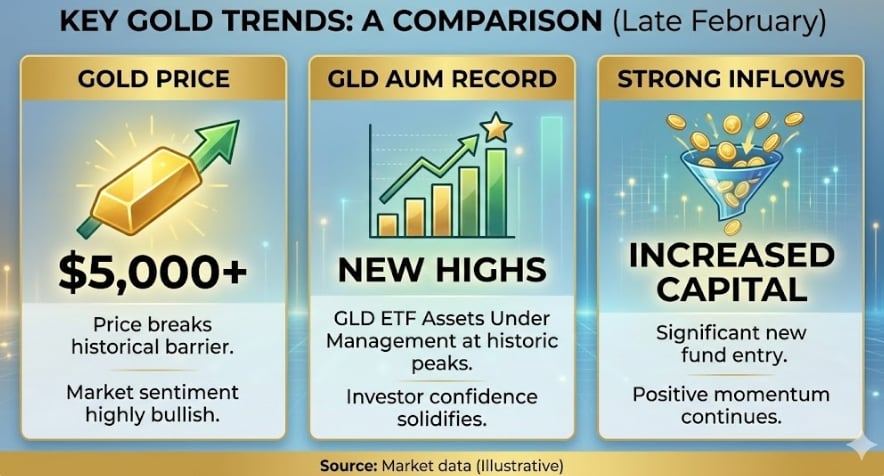
In late January, gold surged above $5,000 and briefly pushed as high as $5,110.50 per ounce. That move was tied to a mix of safe-haven demand, tariff fears, and broader geopolitical stress.
What makes this moment more interesting is what happened next: investors did not treat the breakout like a one-day spike. They kept putting money to work. And one of the clearest places to see that is SPDR Gold Shares (GLD), still the largest physically backed gold ETF in the world. State Street’s official fund page showed GLD at roughly $182.35 billion in assets with 384.00 million shares outstanding as of February 26, 2026.
To me, that is the real signal. The headline was gold breaking $5,000. The more important story is that investors kept adding exposure after the breakout. This usually means the market is treating this as a regime shift, not just a panic spike.
Why GLD Matters More Than Usual Right Now
A lot of people think of GLD as just the “easy gold ETF.” That is true, but it misses why it matters so much in a market like this.
When macro anxiety rises and investors want a clean, liquid way to own gold without dealing with futures or physical bars, GLD is usually one of the first places they go. State Street still positions it as the world’s largest physically backed gold ETF and one of the most accessible ways to get direct gold exposure in a standard brokerage account.
That convenience has always mattered. In 2026, it matters more because gold is no longer acting like a sleepy insurance policy in the background. It is one of the market’s live macro trades again.
What the Latest GLD Numbers Actually Say
GLD Is Bigger Than Ever
As of February 26, GLD’s official fund data showed:
- Assets under management: $182.35 billion
- Shares outstanding: 384.00 million
- NAV per share: $474.87
- Premium/discount: roughly flat, about 0.06%
- Expense ratio: 0.40%
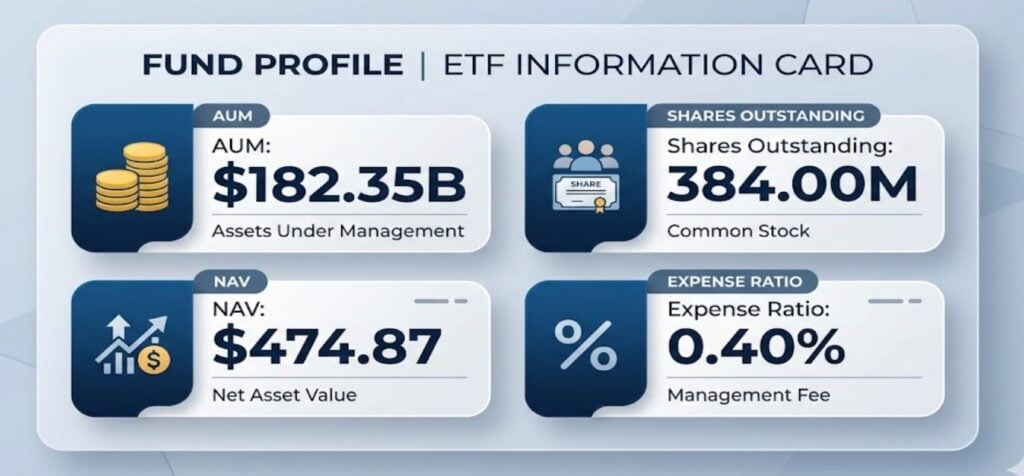
Those are the numbers that matter most if you want the cleanest official snapshot.
The key takeaway is simple: GLD is not just benefiting from a higher gold price. It is also sitting at a size that tells you serious capital is still comfortable using it as the default gold vehicle.
The Fund Is Still Absorbing Real Money
One of the biggest signs that the gold trade still has real sponsorship is that GLD has kept seeing strong late-February inflow momentum, even after gold had already made a historic move. I would be careful about anchoring too hard to one single-day number unless you are quoting a timestamped flow source directly, but the broader point is clear: this is not a tired rally being held up by legacy positions alone.
That is the part many people miss. When a fund this large is still absorbing money after such a big move, it suggests investors do not see the breakout as the end of the story. They see it as confirmation.
The 1-Year Performance Has Repriced Hard
Another place the rally shows up clearly is trailing performance. Recent live fund snapshots put GLD’s 1-year fund flow at roughly $24.2 billion+, with 1-year return metrics in the high-70% to low-80% range, depending on whether you are looking at official month-end figures or live snapshots.
If you want the more conservative, cleaner official figure, State Street’s month-end data for January 31 showed 76.48% 1-year NAV return and 72.09% 1-year market return.
Either way, the message is the same: this has already been an enormous move.
How GLD Actually Works
When markets get emotional, people often buy products they do not fully understand. GLD is fairly simple, but it is still worth knowing what you own.
It Is Physically Backed
GLD is a physically backed ETF. It is designed to reflect the value of actual gold bullion held in custody, not just a synthetic paper claim layered on top of derivatives. That is a big reason it remains the go-to product for many investors who want direct gold exposure without the hassle of holding metal themselves.
The ETF Mechanism Helps Keep Price Close to Value
Like other large ETFs, GLD uses authorized participants to create and redeem shares in large baskets. That structure helps keep the trading price from drifting too far away from the value of the gold behind it. In practical terms, that is one reason GLD remains usable even when trading volume surges and macro headlines get messy.
Custody Still Matters
State Street’s fund materials note that HSBC Bank plc remains the primary custodian, while JPMorgan Chase Bank N.A. also serves as a custodian. That may sound like a technical detail, but for a gold fund at this scale, custody quality is part of the investment case.
Why Gold Above $5,000 Is Pulling More Money In, Not Scaring It Away
Normally, when an asset makes a historic move, people start asking whether the easy money is already gone. That is the right instinct. But gold is not moving because of a meme cycle or a short squeeze. It is moving because the market is repricing deeper macro pressures: geopolitical instability, tariff risks, fiscal strain, rate expectations, and the durability of the dollar’s strength.
Reuters has consistently linked the 2026 gold rally to exactly those forces, including renewed trade tensions and a weaker-dollar backdrop.
That is why I do not think the market is treating gold as a quick panic hedge anymore. More investors seem to be treating it like a structural asset again. And when that happens, GLD naturally becomes more than just a hedge wrapper. It becomes a mainstream macro position.
Can GLD Price Still Make Sense After Such a Huge Run?
This is the real question.
If you are buying GLD simply because gold already went vertical and you think it has to keep doing that in a straight line, that is dangerous. Gold can correct sharply, and safe-haven trades can get crowded.
But if you are buying GLD because you believe the reasons behind the rally still exist — sticky geopolitical stress, policy uncertainty, persistent debt concerns, and the possibility of a weaker dollar regime — then the setup looks different.
That is the line I would use: the question is not whether gold has already rallied. The question is whether the world that caused the rally has actually changed.
What Could Push Gold Even Higher?
Big bank forecasts are not gospel, but they help show where institutional thinking is leaning. Reuters reported on February 25 that J.P. Morgan now sees gold reaching $6,300 per ounce by the end of 2026.
That does not mean gold goes there cleanly, or at all. But it does reinforce one important point: even after crossing $5,000, the market is not treating this as an exhausted move by default.
GLD vs. Other Ways to Play Gold
GLD vs. Physical Gold
Physical gold still appeals to investors who care about direct ownership outside the financial system. But physical bullion is harder to store, insure, move, and sell. GLD wins on convenience, liquidity, and simplicity.
GLD vs. Cheaper Gold ETFs
Yes, there are cheaper gold ETFs. But GLD’s edge has never been “lowest fee.” Its edge is scale and liquidity. For many investors, especially larger ones, that matters more than shaving a few basis points off annual cost.
GLD vs. Silver or Higher-Beta Metals
Silver can outperform in the right window, but it is usually a noisier, more volatile trade. When investors want the cleaner safe-haven expression, gold usually wins — and GLD is still the cleanest listed vehicle for that move.
The Real Risks
GLD is a strong product, but it is not a magic shield.
Gold Can Pull Back
If the dollar strengthens, macro stress cools, or the Fed unexpectedly leans tighter, gold can retrace hard. GLD will follow that move lower.
Safe-Haven Positioning Can Get Crowded
When everyone rushes into the same hedge, even a strong long-term trend can have sharp drawdowns. Big inflows are bullish — until they become too one-sided.
GLD Solves Friction, Not Volatility
What GLD does extremely well is make gold easy to own. What it does not do is remove gold’s price risk. That part is still on the investor.
How I Think About GLD in 2026
I would not think about GLD as just a “hot ETF” or a simple performance chase. That is too shallow.
To me, GLD now serves three roles:
1. A Core Macro Hedge
If you think the world is moving into a longer stretch of instability, GLD still makes sense as a portfolio hedge.
2. A Clean Expression of the Gold Thesis
If you are bullish on gold but do not want the complexity of futures or the hassle of storing metal, GLD remains the easiest high-quality route.
3. A Signal
Even if you never buy GLD, you should watch it. Heavy GLD inflows often tell you something important about the market’s deeper mood. If money is still hiding in gold while risk assets try to rally, that is information worth respecting.
For Tapbit readers, that is the real bridge: GLD is not just an ETF story. It is a macro signal. If GLD keeps attracting capital, it means investors still want protection somewhere under the surface.
Final Take
GLD is no longer just the default gold ETF people use when they want a little insurance in the portfolio. In 2026, it has become one of the clearest windows into how the market is thinking about fear, inflation, policy uncertainty, and trust in the broader system.
Gold crossing $5,000 was the attention-grabbing moment. But GLD’s record size, persistent inflow momentum, and still-expanding footprint are what make the move look real.
That is why GLD matters right now. Not just because it tracks gold, but because it tells you how seriously the market is taking the new gold regime.
Stay on top of macro shifts, safe-haven flows, and major market narratives with Tapbit.
Disclaimer: This article is for informational and educational purposes only and does not constitute investment advice. ETFs, commodities, and macro markets can be volatile. Always do your own research before making investment decisions.