
Qualcomm (NASDAQ: QCOM) is back in focus after Baird lowered its price target from $200 to $177 while maintaining an Outperform rating. On the surface, a price-target cut sounds bearish — but the bigger picture is more nuanced.
Qualcomm recently reported record quarterly revenue and strong execution across key segments like automotive and IoT. At the same time, management flagged near-term headwinds in the handset market, especially around memory supply constraints and pricing pressure. That combination — strong fundamentals but softer forward visibility — is exactly why QCOM has become a “watch closely” name rather than a simple bullish or bearish call.
If you track both crypto and equities, you can monitor market prices anytime on Tapbit Price.
What Happened: Baird Cut QCOM’s Target but Kept an Outperform Rating
Recent market coverage (including the Bitget/Finviz syndicated item) said Baird reduced its QCOM price target to $177 from $200, while keeping an Outperform rating. The note framed fiscal 2026 as a transitional year across some end markets, which helps explain why analysts can stay constructive on the company while trimming valuation expectations.
That distinction matters: a lower target does not automatically mean analysts are turning negative on Qualcomm’s business. In many cases, it reflects a reset in near-term assumptions rather than a breakdown in the long-term thesis.
Qualcomm’s Latest Results Were Still Strong
Qualcomm’s fiscal Q1 2026 results were strong on headline numbers:
- Revenue: $12.3 billion (record)
- Non-GAAP EPS: $3.50 (record/high end of guidance)
- QCT revenue: $10.6 billion (record)
- QCT Automotive: $1.1 billion (+15% YoY)
- QCT IoT: $1.7 billion (+9% YoY)
In other words, Qualcomm is not being repriced because of weak execution. The company delivered a strong quarter. The debate is more about what happens next, especially in smartphones and handset component demand.
Why Analysts Are More Careful on 2026
The biggest near-term issue is not Qualcomm’s current results — it is forward uncertainty in the handset supply chain.
Qualcomm’s earnings materials highlighted that rising demand for memory used in AI data centers is creating near-term uncertainty in memory supply and pricing for handset OEMs. The company also said some OEMs, especially in China, have taken a more cautious approach to build plans and channel inventory. That can reduce chipset orders even when long-term demand trends remain intact.
This is a classic “transitional year” setup: strong company fundamentals, but near-term friction in the supply chain and customer planning process.
Qualcomm’s Diversification Is a Big Reason Bulls Stay Interested
One reason Qualcomm still gets bullish ratings despite target cuts is diversification. It is no longer just a smartphone story.
Qualcomm continues to grow in:
- Automotive (digital chassis, connected vehicles, in-car compute)
- IoT (industrial, networking, edge AI devices)
- AI and edge computing (premium devices and on-device AI experiences)
Qualcomm’s Q1 materials and management commentary both support this view: the company is still benefiting from premium device demand and expanding beyond handsets, even though the handset channel remains an important source of volatility.
What Traders Should Watch Next for QCOM
- Handset demand signals: Are OEMs still cutting build plans, or does demand stabilize?
- Memory pricing pressure: This could continue to affect near-term smartphone shipments
- Automotive and IoT growth: These segments are key to the diversification thesis
- Margin and guidance quality: Strong execution matters, but forward guidance often drives the stock
In short, Qualcomm is one of those stocks where “good earnings” can still lead to a mixed market reaction if investors worry about the next few quarters.
Current QCOM Price Snapshot
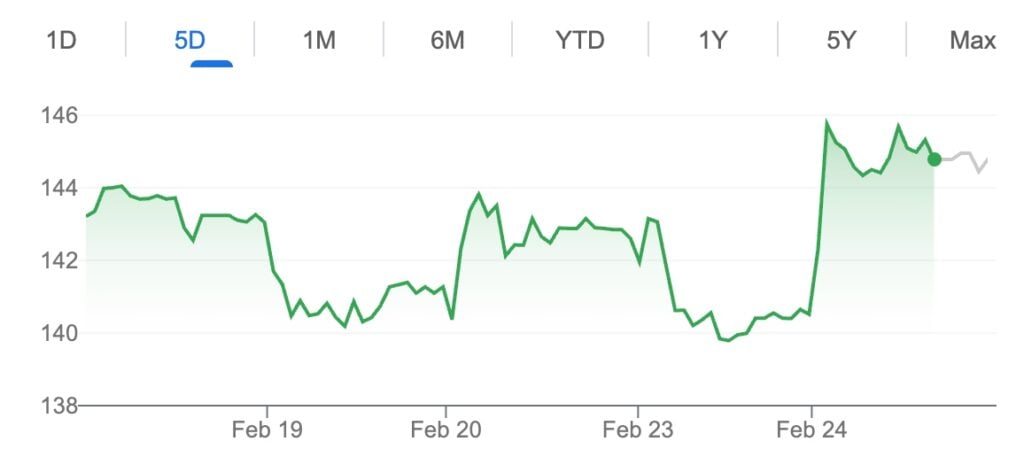
As of the latest market snapshot available while writing, QCOM was trading around $144.78. That puts it well below the newly reduced $177 target, which is why valuation debates remain active among analysts and traders.
How This Matters for Crypto Traders Too
You might wonder why a semiconductor stock matters in a crypto-focused workflow. The answer is simple: names like Qualcomm are part of the broader AI, compute, and risk-on sentiment cycle. When semiconductor and AI infrastructure stocks move, they can influence macro risk appetite across tech and digital assets.
For traders managing both crypto and cross-market exposure, it helps to track sentiment beyond crypto-only headlines.
Track Markets on Tapbit
Whether you’re trading crypto full time or watching cross-market signals from tech and AI names, you can explore markets on Tapbit, create an account at Tapbit Register, or sign in via Tapbit Login.
Final Thoughts
Baird’s QCOM target cut is a good example of how markets work in 2026: a company can post strong results, grow in strategic segments, and still face valuation pressure if near-term conditions look uncertain.
For Qualcomm, the story is not “broken” — it is evolving. Traders should watch whether handset weakness proves temporary while automotive and IoT continue to scale. If that happens, QCOM may remain one of the more important semiconductor names to watch in the AI and edge-computing cycle.