
Vitalik Buterin is back on a familiar theme, but this time the timing feels more urgent.
In recent comments highlighted by Phemex, the Ethereum co-founder argued that as authoritarian tendencies grow stronger around the world, democratic tools such as DAOs and privacy-preserving voting systems deserve a second look. His point was not simply that AI is powerful. It was that AI does not have to belong only to platforms, governments, or surveillance-heavy systems. In the right setting, it could also help strengthen decentralized governance.
That sounds ambitious, but it lands because it speaks to a problem the crypto industry has not really solved: DAO governance still does not work very well for most people.
That gap between formal voting rights and actual governance capacity is what makes Vitalik’s latest push worth paying attention to.
The Real DAO Problem Is Not Voting — It’s Participation
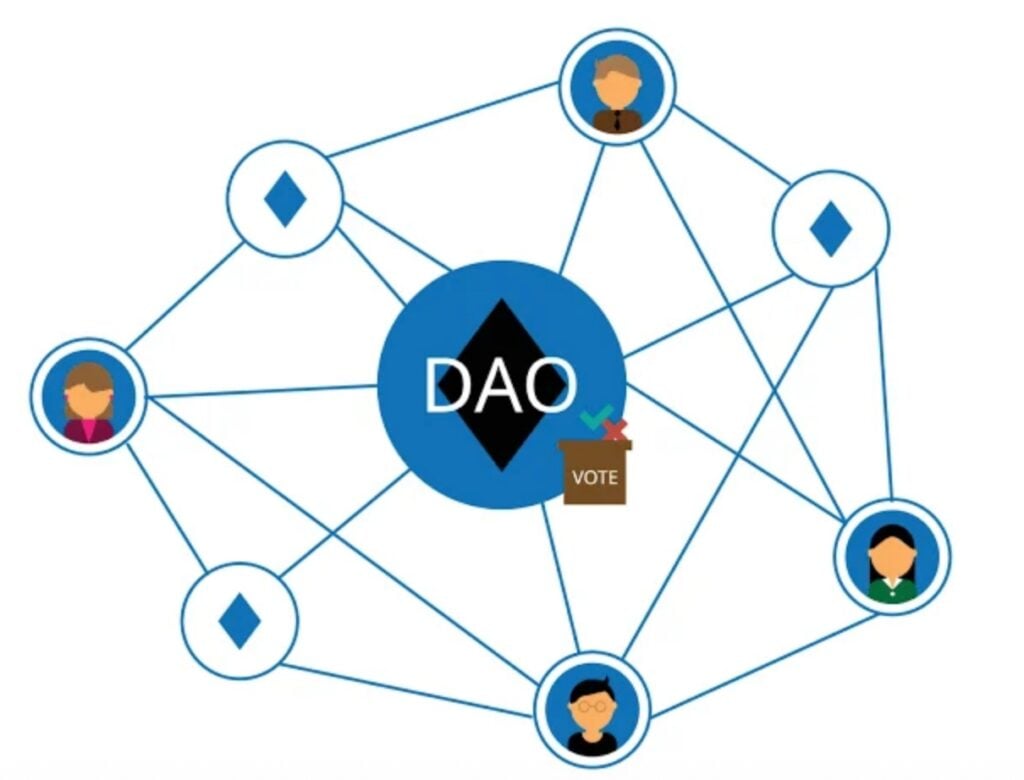
For years, the crypto space has treated governance as if the main goal were simply to get voting on-chain. But putting votes on-chain did not automatically make decision-making healthier. It mostly made the process more visible.
That visibility has benefits, of course. Communities can see who proposed what, who voted, and how treasury decisions were made. But it also created a familiar pattern: large holders move first, smaller holders watch them, and the rest of the community either follows along or ignores the process entirely.
Over time, this pushes many DAOs toward a model that looks decentralized from the outside but feels concentrated on the inside. A handful of well-informed or well-positioned participants carry most of the real influence, while the majority stays passive.
That is the backdrop for Vitalik’s recent argument. According to reporting from CoinDesk, he has been discussing the idea of AI “stewards” trained on an individual user’s values and preferences, helping that user navigate the constant stream of governance decisions that most people do not realistically have time to process on their own.
This is an important distinction. He is not proposing that one giant model should run a DAO. He is talking about each participant having their own AI assistant — something closer to a governance co-pilot than an automated ruler.
What Vitalik Seems to Be Proposing
Strip away the buzzwords, and the core idea is fairly simple.
Instead of asking every token holder to personally analyze every proposal, you let users rely on a personal AI system that understands their priorities, past decisions, and governance preferences. That system could summarize proposals, flag trade-offs, compare current decisions with a user’s stated values, and in some cases even cast routine votes on the user’s behalf.
The appeal of that model is obvious. It does not try to solve governance by pretending everyone will suddenly become a full-time participant. It starts from the more realistic assumption that most people will not.
In that sense, AI is not meant to replace political judgment. It is meant to reduce the attention cost of participating in governance at all.
If that sounds familiar, it is because crypto has long tried to solve this problem through delegation. The issue is that delegation often concentrates influence even further. Personal AI agents suggest a different path: instead of outsourcing judgment upward to a few visible delegates, users could outsource routine analysis sideways to tools that remain aligned with their own preferences.
Why Privacy Matters Just As Much As AI
But AI is only half of this conversation. The other half is privacy.
Vitalik has repeatedly linked the future of governance to zero-knowledge systems and privacy-preserving voting. That matters because today’s DAO governance is often transparent in a way that is not always healthy.
When votes are fully public, influence becomes easier to track and easier to pressure. Communities can see who moved first, who followed, and which side powerful token holders chose. That may sound like accountability, but it can also create a more subtle kind of pressure system — one where social influence, incentives, and strategic signaling start to shape outcomes before a proposal is even decided.
This is where privacy-preserving voting becomes more than a technical upgrade. If a voter can prove they are eligible and prove their vote was counted correctly without exposing exactly how they voted, the mechanics of bribery, coercion, and herd behavior become harder to sustain.
That is one reason why zero-knowledge voting keeps returning to the governance conversation. It offers a way to preserve legitimacy without forcing every voter into a glass box.
Why This Conversation Feels Bigger in 2026
Part of the reason this idea resonates now is the broader political and technological climate.
Outside crypto, AI is increasingly tied to surveillance, censorship, behavioral targeting, and narrative control. That is not just a theoretical fear. Reports from Freedom House and V-Dem have continued to warn that digital freedoms are under pressure and that authoritarian systems are becoming more capable of using technology to tighten control.
Against that backdrop, Vitalik’s argument reads less like a product pitch and more like a directional bet: if AI is going to reshape public life anyway, decentralized systems should not leave that terrain entirely to centralized actors.
That does not mean blockchains suddenly become democratic by default. It means the design choices start to matter more. AI attached to a closed platform usually strengthens the platform. AI attached to an open system with privacy protections and verifiable rules could, at least in theory, strengthen the individual instead.
The Risk Is Not Gone — It Just Changes Shape
Still, there is an obvious catch.
If large numbers of people begin using AI agents to participate in governance, power may not disappear. It may simply move. Today, crypto worries about whale dominance. Tomorrow, it may worry about model dominance.
If most users rely on similar base models, similar interfaces, similar default prompts, or similar recommendation layers, then governance may look distributed while becoming quietly standardized underneath. What appears to be millions of individual choices could end up being a narrower set of machine-shaped preferences than anyone intended.
That is why this idea should be treated seriously, but not romantically.
AI might help more people stay involved in governance. It might reduce passivity. It might make participation less exhausting. But it can also create a new layer of mediation between users and decision-making. If people do not understand how their governance agents think, what data they rely on, or where their defaults come from, then decentralization could end up with a new bottleneck instead of a solution.
Where This Leaves Crypto
The most useful way to read Vitalik’s latest comments is probably not as a grand promise. It is more like a diagnosis.
Crypto has spent years proving that online communities can coordinate capital. It has not yet proved, at scale, that they can govern themselves well.
That is why this discussion matters. Not because AI automatically fixes governance, and not because zero-knowledge voting is a silver bullet, but because both point toward the same underlying goal: lowering the cost of participation without handing even more power to the few people already paying attention.
If crypto wants to make a serious case for decentralized governance in the years ahead, it will need more than token voting and forum debate. It will need systems that help people participate without forcing them to live inside governance dashboards all day. It will also need privacy safeguards strong enough to protect decision-making from turning into theater.
That is the opening Vitalik seems to be pointing at.
Whether DAOs are ready for it is a different question.
If you are following how AI, Ethereum, and DAO governance are starting to collide, you can track broader crypto market developments on Tapbit. Traders looking to react quickly to market-moving narratives can also access their accounts through the Tapbit login page, while new users can explore the platform via Tapbit registration.