

In March 2026, the global macroeconomic focus has abruptly shifted from the Federal Reserve’s interest rate dot plot to the geopolitical powder keg surrounding the Strait of Hormuz. Following severe supply disruptions, West Texas Intermediate (WTI) crude oil briefly spiked near $120 per barrel. While emergency releases from strategic reserves have temporarily hammered prices back down, the systemic risk overshadowing energy markets remains highly active.
Institutional risk managers across Wall Street are currently stress-testing an extreme tail-risk scenario: What happens to global financial markets if the conflict escalates, supply chains break, and crude oil permanently settles above $200 per barrel?
For Web3 investors managing portfolios on Tapbit, this is not a theoretical academic exercise. It is a potential liquidity shock that dictates survival. A prolonged energy crisis guarantees “Stagflation”—the toxic economic nightmare where hyper-inflation collides with severe economic stagnation.
Under the crushing weight of a $200 oil shock, traditional safe havens and digital assets will execute vastly different market scripts. Here is the Tapbit breakdown of how capital will rotate through Gold, Bitcoin (BTC), and Ethereum (ETH).
1. Gold: The Ultimate Analog Safe Haven
In a $200 oil stagflation scenario, the bullish thesis for physical gold is absolute and historically proven.
When skyrocketing energy costs act as a regressive tax, decimating corporate profit margins and consumer spending power, a deep global recession becomes inevitable. Central banks are subsequently trapped in a no-win scenario: raising interest rates to fight oil-driven inflation will crush the remaining economy, while cutting rates will ignite hyper-inflation.
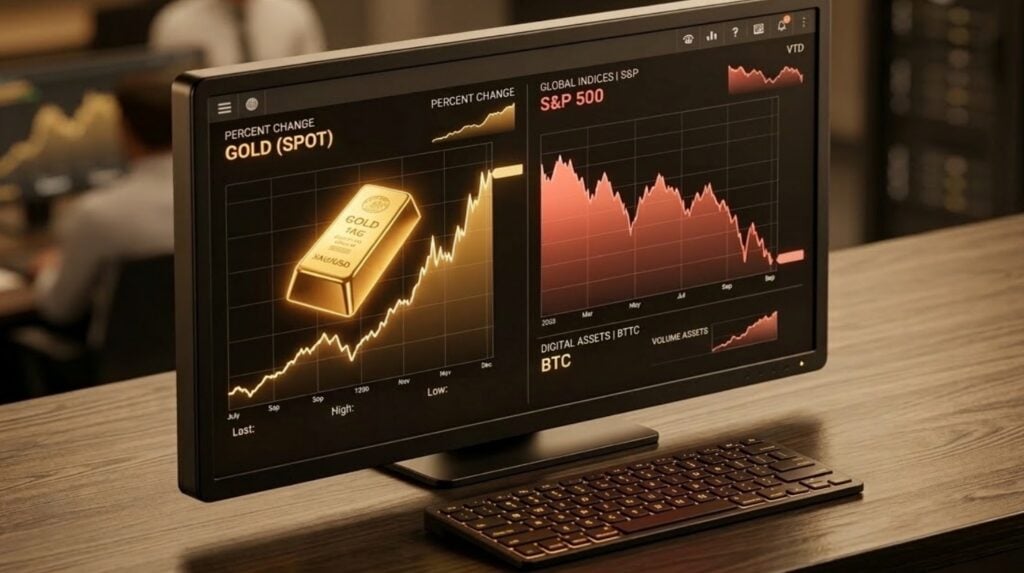
During this period of monetary paralysis and rapid fiat currency debasement, sovereign wealth funds and institutional capital will unconditionally flood into physical gold. Having battle-tested the 1970s oil shocks, gold will easily shatter all-time highs, serving as the foundational anchor for traditional capital seeking refuge from the stagflation storm.
2. Bitcoin (BTC): The Digital Gold Stress Test
For Bitcoin, currently trading near $71,600, a $200 oil shock acts as a violent double-edged sword. Its price action will likely follow a brutal “V-shaped” trajectory.
- The Initial Liquidity Flush: In the immediate aftermath of an oil spike, global risk assets face indiscriminate selling. If the Federal Reserve is forced to maintain tight monetary policy to combat energy inflation, the US Dollar (DXY) will strengthen, draining liquidity from the crypto ecosystem. As a high-beta asset, Bitcoin will initially suffer a severe, correlated drawdown alongside traditional equities as leveraged players are wiped out.
- The Hard Money Awakening: However, as stagflation deepens, the fragility of the fiat system becomes undeniable. When institutions realize the physical limitations of moving and settling gold globally, Bitcoin’s core value proposition—absolute scarcity, decentralization, and borderless transferability—will be fully activated. After surviving the initial liquidity crisis, BTC will absorb massive inflows of capital fleeing depreciating fiat currencies, firmly establishing its macroeconomic status as “Digital Gold.”
3. Ethereum (ETH): The High-Beta Tech Trap
Unlike Bitcoin’s decentralized money narrative, Ethereum will face significantly harsher downward pressure under an extreme high-oil scenario.
Ethereum’s fundamental value is derived from its utility as the “World Computer.” Its valuation model relies heavily on network activity—specifically Decentralized Finance (DeFi) lending volumes, NFT trading, and the consistent burning of on-chain Gas fees.
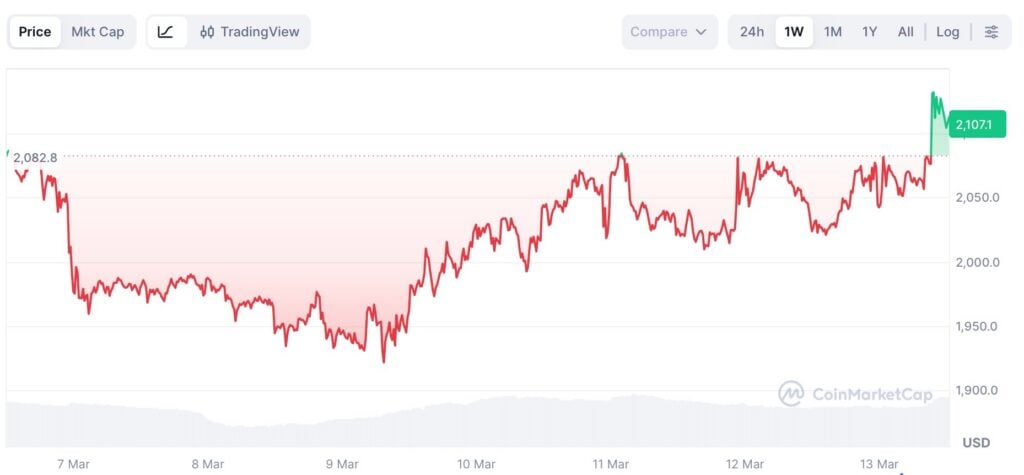
During a global recession triggered by $200 oil, retail disposable income will evaporate, and enterprises will slash technological development budgets. This guarantees a cliff-edge drop in speculative on-chain activity.
More importantly, Wall Street pricing models classify Ethereum as a high-growth technology stock. When the macro economy stagnates and corporate earnings collapse, the tech sector is historically the first to be liquidated. Consequently, ETH will struggle to attract the safe-haven premium afforded to Bitcoin, instead facing prolonged valuation compression and network stagnation until the broader economic cycle recovers.
Execute Your Macro Strategy on Tapbit
The $200 oil scenario is a stark reminder that the cryptocurrency market is no longer an isolated speculative sandbox; it is deeply tethered to the heartbeat of the global macro economy.
Surviving the coming capital rotation requires precision. Smart money will likely tilt spot exposure heavily toward the inflation-resistant properties of BTC, while aggressively utilizing derivatives to hedge exposure against cycle-dependent altcoins like ETH.
To navigate extreme macroeconomic volatility, you require robust, zero-latency trading infrastructure.
- ➡️ Ready to trade the macro rotation? Log in to Tapbit to utilize our deep spot and derivatives liquidity, executing your hedges with absolute precision during periods of high volatility.
- ➡️ Not registered yet?Create your free Tapbit account today to access institutional-grade charting tools and a zero-slippage trading environment. Take control of your portfolio before the market dictates your strategy.