
When a drone strike on a single Middle Eastern smelter sends London Metal Exchange (LME) 3-month aluminum surging past $3,500 per tonne, you aren’t just looking at a temporary geopolitical premium. You are looking at a market with zero shock absorbers.
Last weekend’s attack on Emirates Global Aluminium’s (EGA) Al Taweelah complex knocked 1.6 million tonnes of annual production offline. The immediate market reaction was violent, but if you are trading this based on a standard “buy the rumor, sell the news” geopolitical playbook, you are misreading the tape.
At the Tapbit, we look at the physical realities dictating the paper markets. The EGA outage is not the core problem—it is simply the catalyst that exposed a paralyzed global supply chain. Here is the actual math driving the 2026 aluminum deficit, and why the West cannot simply flip a switch to fix it.
The Physics of the EGA Outage
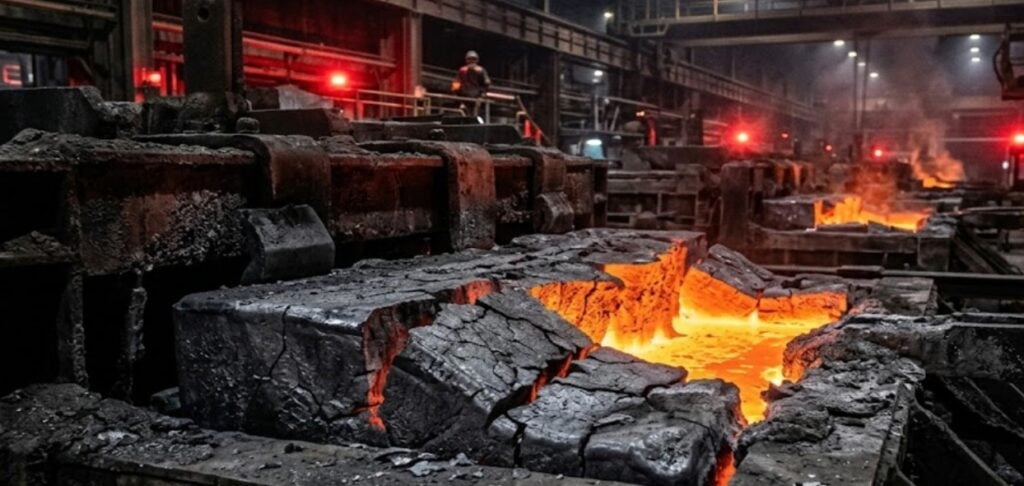
You cannot just reboot an aluminum smelter. When EGA was forced into an emergency shutdown, the molten metal inside the electrolytic reduction cells (the “potlines”) solidified. Chipping out solid aluminum and rebuilding these cells is a brutal, capital-intensive process.
EGA management has already signaled a 12-month phased restart. That means this 1.6-million-tonne hole in the market will persist through the entirety of 2026.
Combine this with the ongoing closure of normal shipping lanes through the Strait of Hormuz. Gulf producers—who account for roughly 9% of global supply—are currently burning cash and time rerouting metal through alternative ports like Oman’s Sohar. Fastmarkets data already shows physical premiums for aluminum billet spiking wildly in consumer markets as buyers scramble to secure physical delivery.
Right now, the market is eating through pre-positioned overseas inventory. Once that cushion is gone, the real squeeze begins.
The China Buffer is Gone
Historically, industrial metal deficits were solved by China. If the West ran short, Chinese smelters would ramp up utilization and flood the market with exports, capping global prices.
That era ended quietly, and the market is just now waking up to it.
Beijing has strictly enforced a 45-million-tonne annual capacity cap. This wasn’t a suggestion; it was a hard limit mandated to meet domestic carbon emission targets and restructure their economy. By early 2026, Chinese smelters had already bumped their heads against this ceiling. According to recent production tracking from Discovery Alert, China’s net aluminum exports have plummeted.
They are no longer the world’s swing producer. If Europe or the US needs an extra million tonnes of metal, they cannot call Beijing.
The AI Power Paradox: Outbid by Big Tech
If the Middle East is impaired and China is capped, the textbook economic response is for the US and Europe to restart their idle smelters. There is over 1 million tonnes of capacity sitting dark in Europe alone.
So why aren’t they turning the lights back on? Because they can’t afford the electricity.
Aluminum is essentially “solid electricity”—it takes about 14 megawatt-hours to smelt a single tonne. To survive, a smelter needs a long-term Power Purchase Agreement (PPA) at roughly $30 to $40/MWh.
In 2026, industrial metals are losing a bidding war against Artificial Intelligence. Tech giants are aggressively buying up grid capacity across North America and Europe to power massive AI data centers, frequently locking in power contracts at well over $100/MWh. Utilities have zero financial incentive to sell cheap power to a legacy aluminum plant when Big Tech is willing to pay a massive premium.
This power squeeze means the West’s idle aluminum capacity is effectively dead capacity.
How to Trade the Deficit
The market is fundamentally short. We have a hard supply ceiling colliding with steady demand, supercharged by an acute geopolitical shock.
For traders, the plays are structural:
- Watch the Forward Curve: Look for deepening backwardation (where spot prices trade higher than futures) on the LME. This is the ultimate indicator of physical panic among manufacturers.
- Monitor the Strait of Hormuz: Any de-escalation that frees up shipping lanes will cause a short-term price dip as delayed metal hits the market—this will likely be a buying opportunity, as the structural deficit remains intact.
- Track the Inventories: Keep a close eye on LME and COMEX warehouse levels. When the current “on-water” buffer drawn from the Middle East is exhausted, spot prices will decouple violently from paper futures.
Volatility in the commodities sector is bleeding into all macro assets, driving currency fluctuations and influencing broader inflation metrics. Position yourself on a platform built for professional execution. You can track global market movements and manage your derivatives exposure on the Tapbit Homepage. If you need institutional-grade matching engines and deep liquidity, register your Tapbit account today, or log in to adjust your portfolio risk.
Disclaimer: This analysis is for informational purposes only. Tapbit Research does not provide personalized investment advice. Commodities and derivatives trading carry significant risk of loss.