Staring at one-minute crypto charts all day does more than just fry your eyes; it completely drains your cognitive bandwidth. When you are fighting off FOMO or feeling the dangerous urge to “revenge trade” after a stop-loss gets hit, you don’t need to look at another MACD indicator. You need to force your brain to disconnect for exactly five minutes.
Enter the unexpected hero of 2026: Google Block Breaker.
What started years ago as a quirky search engine Easter egg has quietly evolved into a fully functional, highly addictive browser game. Today, it’s the go-to micro-break tool for Wall Street quants and Tapbit spot traders alike. Here is a look at how this arcade classic evolved, why it works so well as a psychological reset, and how to dominate the leaderboards before getting back to the markets.
The Evolution: From Easter Egg to Arcade Staple
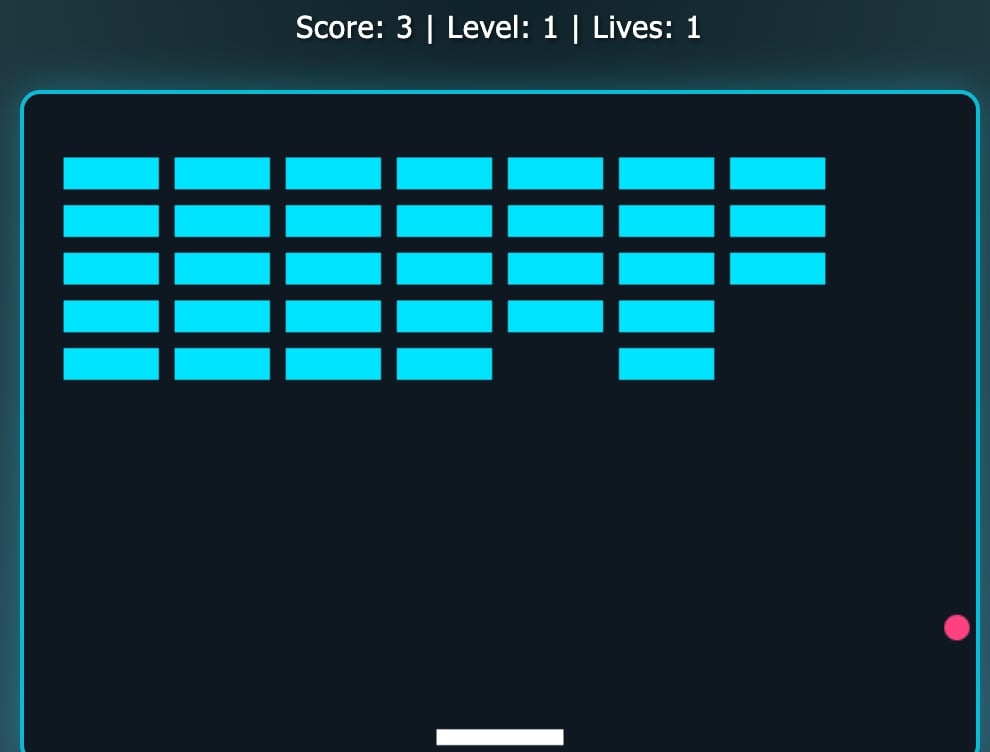
Google Block Breaker is a modern homage to the legendary 1976 Atari game, Breakout.
Internet veterans might remember the old 2013 version. Back then, if you typed the right phrase into Google Images, the image results would literally transform into breakable bricks. While Google eventually retired that specific version (you can still play the clunky original via the famous elgooG archive site), the 2026 native experience is vastly superior.
Today, there are no complex workarounds required. Simply type “Block Breaker” or “Google Block Breaker” into your desktop or mobile Google search bar. A polished, interactive game widget pops up instantly at the top of your results. It automatically adapts to your system’s light or dark mode and features flawless touch-screen controls for mobile users. Click “Play,” and you are instantly in the game.
The 2026 Mechanics: Beyond Just Bouncing a Ball
Unlike the bare-bones 1970s original, the 2026 native search version comes loaded with progressive difficulty, over 150 potential block formations, and a dynamic power-up system.
Know Your Blocks
- Standard Bricks: One hit and they shatter. The basic cannon fodder.
- Multi-Hit Bricks: These change color as you hit them, requiring two or three strikes to break.
- Unbreakable Bricks: Metallic or gold-colored blocks that act as permanent obstacles. You have to use them tactically to ricochet the ball into hard-to-reach corners.
- Power-Up Carriers: Glowing blocks that drop game-changing buffs when smashed.
The Power-Up Arsenal
Catching the right power-up can flip the momentum of the game entirely:
- Multi-ball: Splits your ball into two or three. Pure, screen-clearing chaos.
- Wide Paddle: Doubles your paddle size. An absolute lifesaver in late-game stages when the ball speed becomes brutal.
- Laser Cannon: Equips your paddle with upward-firing lasers, perfect for sniping stubborn blocks trapped behind unbreakable walls.
- Slow Ball: Drastically drops the ball’s velocity, giving you a chance to breathe and set up precision angles.
- Extra Life: The holy grail. Risk everything to catch it.
The Psychology: Why It’s the Perfect “Brain Reset”
On productivity forums and trading subreddits, this game has earned the title of the “Five-Minute Brain Reset.” Crypto trading is a high-pressure environment with no defined endpoint; the market never closes. Block Breaker, conversely, offers a perfectly bounded world. The rules are absolute, and every level has a definitive end.
When you clear a screen of blocks, your brain receives a clean, manageable hit of dopamine. The simple, rhythmic physical action of moving the paddle allows your “Default Mode Network”—the part of the brain responsible for background processing and creativity—to reboot. It violently pulls you out of a negative mental loop after a bad trade, providing a cognitive recalibration. It isn’t procrastination; it’s emotional risk management.
High-Score Strategies for 2026
If you want to do more than just relax and actually want to crush the global leaderboards, you need to play strategically. Here are the tactics the pros use:
- The Edge Game: Avoid hitting the ball with the dead center of your paddle. Clipping the ball with the extreme left or right edges creates sharp, horizontal trajectories. This is how you slide the ball into tight gaps to bounce around behind the brick clusters.
- Strategic Preservation: Don’t FOMO into every power-up. If a “Multi-ball” drops when there is only one brick left on the screen, let it fall. Power-ups don’t carry over well between level transitions. Wait for a fresh screen to unleash chaos.
- The Zen Paddle: When the ball reaches maximum velocity, players tend to panic and swipe wildly. Stop watching the ball directly. Anticipate its trajectory, move the paddle to the landing zone early, and wait.
- Target the Center Channel: Always focus on breaking a vertical column through the middle of the bricks first. Once you blast a hole through the center, you can shoot the ball to the “roof.” It will bounce wildly between the top wall and the back of the bricks, racking up massive points while you sit back and watch.
Wrap Up and Get Back to Trading
In an era dominated by heavy VR headsets and complex DeFi protocols, Google Block Breaker proves that flawless, simple execution never goes out of style.
The next time you feel your focus slipping while staring at the Tapbit order book, don’t force a bad trade. Open a new tab, search for the game, and take a 60-second mental vacation. Clear the board, clear your head, and come back to the markets sharper than before.
Ready to apply that renewed focus? Explore high-liquidity markets and execute your strategies seamlessly on the Tapbit Homepage.
- Already have an account? Log in here to check your open positions.
- New to the platform? Register on Tapbit today and start trading with precision.